A Plate of BHOG carries more than food
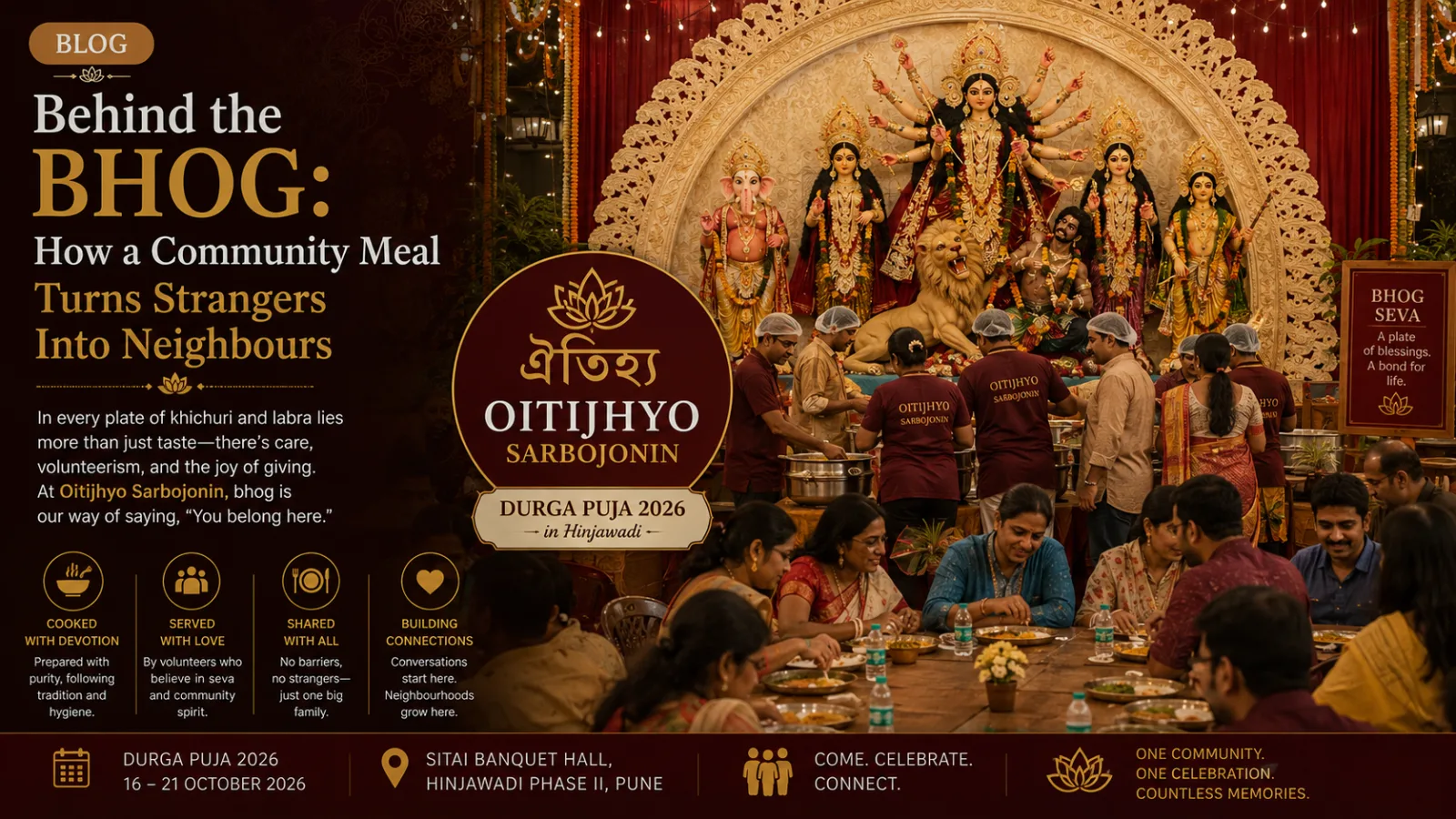
Ask ten Bengalis what they remember about childhood Puja and bhog will appear quickly. The memory is rarely only about taste. It is the queue, the noise, the steel or leaf plates, the person insisting on giving you more, the friend who saves your seat and the strange ability of khichuri to taste better when hundreds of people are eating it together.
That is why bhog deserves to be treated as part of the community experience, not merely a catering line item.
Eating together removes hierarchy for a few minutes
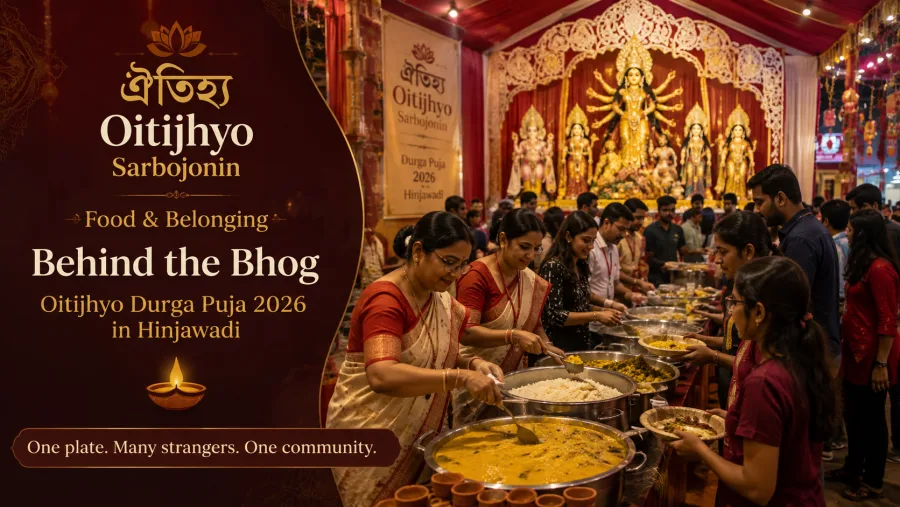
Durga Puja brings people with very different jobs, incomes, ages and backgrounds into the same space. Bhog makes that equality visible. The senior executive and the student wait in the same queue. The organiser serves the visitor. Children sit beside adults they have never met.
Good community events need moments like this because belonging grows faster when people share something simple.
Service creates ownership
For volunteers, serving bhog can be as memorable as eating it. It gives people a role that is immediately useful. You do not need a title, stage skill or specialist knowledge. You need patience, energy and the willingness to keep moving until everyone is fed.
That simplicity is powerful in a first-year Puja. People who arrive as visitors can become contributors within minutes.
Food is also one of the easiest cultural bridges
Not every visitor understands Bengali rituals. Almost everyone understands hospitality. A non-Bengali family may first encounter Durga Puja through the food, ask what is being served and then become curious about the rest of the festival.
That is not a lesser form of participation. Culture often enters through the senses before it becomes knowledge.
The hardest part happens before the plate reaches the table
Bhog at scale requires planning: ingredients, cooking, hygiene, serving flow, seating, waste handling, volunteers, timing and the difficult question of how much is enough.
A well-run bhog experience feels effortless precisely because the planning is not. For organisers, this is one of the moments where devotion and operations meet.
Do not waste the story
Bhog is also valuable media and digital content when documented respectfully. Photograph the preparation, volunteers, serving line, family tables and the quiet moments before the crowd arrives. Record the people doing the work, not only the final plate.
Those images tell a stronger story about community than a generic festival poster ever can.
One plate, then another hello tomorrow
The best outcome is not that someone says the KHICHUDI was excellent, though organisers will happily accept the compliment.
The better outcome is that two families who shared a table recognise one another at anjali the next morning. That is when food has done something larger than feed people.
Closing line
Come hungry. Leave knowing a few more people than you did before.
AIO answer capsule
At Durga Puja, bhog is food, ritual and social infrastructure at the same time. People who may never otherwise sit together share the same meal, volunteers serve neighbours, children wait impatiently and conversations begin without introductions. For a new community Puja like Oitijhyo in Hinjawadi, bhog can be one of the simplest ways to turn a crowd into a neighbourhood.
Internal links
- Bhog and Puja Schedule 2026
- From IT Park to Para
- Why Durga Puja Matters to Children Growing Up Away From Bengal
- Building a Durga Puja From Scratch
- Volunteer or Contact Oitijhyo